
San Sebastián for Incentive Groups: The Complete Gastronomic Programme
San Sebastián (Donostia), Spain, is the most requested gastronomic incentive destination in Europe and, by the density of its Michelin-starred restaurants relative to its population, one of the most concentrated fine dining cities in the world. These facts are well known in the incentive industry. What is less well understood is the structure of the San Sebastián gastronomic programme — the order in which the elements of the city's food culture should be experienced, and why the most distinctive element of the programme is not a starred restaurant.
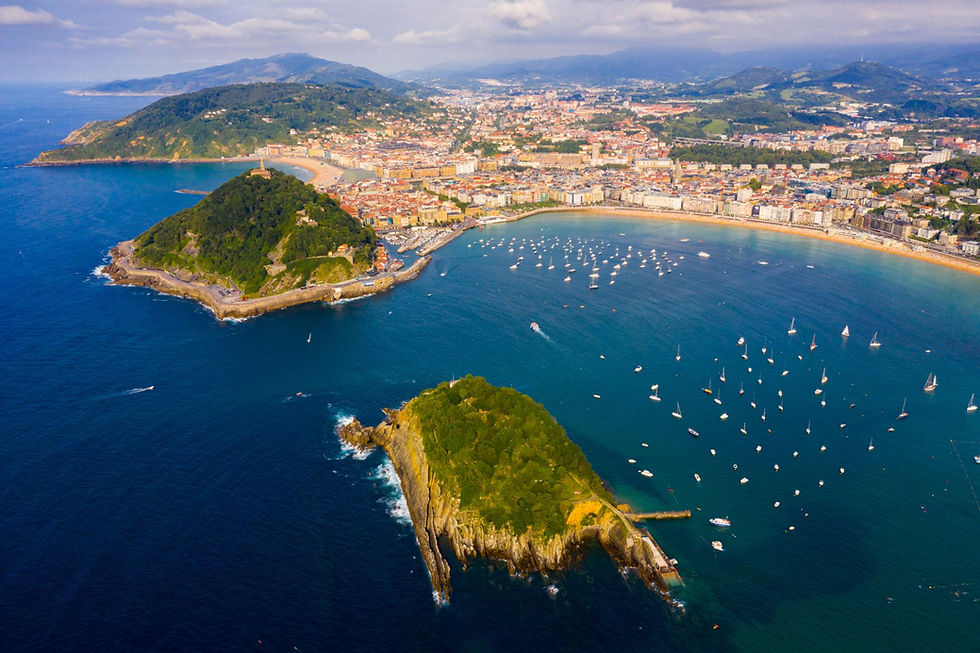
San Sebastián - The Pintxo Circuit
The Parte Vieja — the old town of San Sebastián — contains the highest density of pintxo bars per square metre of any urban area in the world. Pintxo (the Basque spelling of pincho) are the small snacks mounted on bread slices or skewers that line the counter of every bar in the Parte Vieja from 12:00 to 14:00 and from 19:30 to 23:00. They are not tapas in the Castilian sense — they are a specific Basque creation, each bar specialising in its own variations, and the act of moving between bars (txikiteo) is a social ritual as much as a feeding one. A guided pintxo circuit with a local specialist — not a tour guide, but someone who knows the specific counter at Bar Zeruko (one of the bars where the pintxo has been elevated to a form of culinary architecture), the moment to arrive at Bar Ganbara for the angula season, the specific counter at Bar Néstor for the tomato salad that the locals know about and the food tourism media has not yet reached — is the most genuine encounter with the city's food culture available.
The pintxo circuit is the correct opening element of a San Sebastián programme: it is informal, highly social, and democratic in a way that a starred restaurant dinner is not. A group of twenty executives who have spent a day in transit moving through the Parte Vieja in the evening, eating and drinking at four or five counters, will have produced more genuine social interaction by 22:00 than a three-course dinner at a formal table produces in the same time.
The Txoko
The txoko is the most distinctive institution of the San Sebastián gastronomic culture and the most difficult element of the programme to access. A txoko (from the Basque word for corner or nook) is a private gastronomic society — a members-only cooking club, typically in a basement or converted space in the old town, where the members gather to cook for each other. The txoko is a specifically Basque institution with no precise equivalent elsewhere in Europe: it is not a restaurant, not a catering facility, not a private dining room. It is a community of cooks who use the txoko's kitchen to practise and socialise, and who occasionally receive guests. The xocoa's physical character — the kitchen open to the dining room, the specific atmosphere of a private social club that is primarily a kitchen — produces a dinner experience that has no equivalent in the standard hospitality infrastructure.
Access to a txoko for a corporate group requires a Basque membership relationship — the txoko is by definition members-only and does not receive external corporate bookings through commercial channels. A programme that includes a txoko dinner has something that no other San Sebastián programme includes, which is the correct description of what a private concierge provides.
The Basque Country Beyond the City
The landscape within an hour of San Sebastián extends the programme beyond the gastronomic argument. The Rioja Alavesa — the Basque part of the Rioja appellation, across the Sierra de Cantabria ridge — produces some of the finest Tempranillo in the region and is accessible for private bodega visits in the agricultural estate tradition of the Basque Country: family properties, often with exceptional contemporary architecture (the Frank Gehry-designed Marqués de Riscal hotel in Elciego; the Zaha Hadid-designed Ysios bodega near Laguardia), that receive groups with a seriousness and a cultural depth that the Penedès and La Mancha mass-production bodegas do not. The Basque coast west of San Sebastián, with the cliffs at Zumaia and the medieval town of Getaria above the sea, extends the landscape argument for a half-day excursion that adds geographical context to the urban programme.


