

Private Puglia Experiences — The Generous South, Properly Accessed
Puglia gives without asking. Its masserie — fortified whitewashed farmhouses with private chapels, kitchen gardens, and olive groves that extend past the visible horizon — set a standard of generous hospitality that few Italian regions approach. Its olive oil is pressed from trees that were ancient when the Crusaders passed through in the eleventh century.
Its table is legendary. And yet, for those who arrive with the right introductions, Puglia's most significant experiences are precisely those that have not been packaged for international consumption.
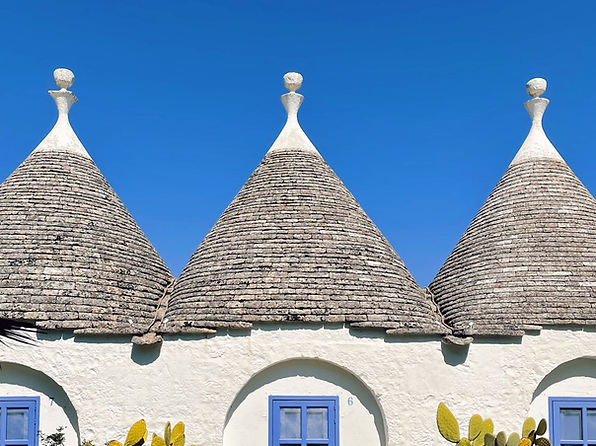
The Masseria — Puglia's Defining Institution
A masseria is a self-contained fortified agricultural estate, historically constructed to protect workers, livestock, and produce from the Saracen raids of the medieval coast.
Today, many family-owned masserie in the Itria valley and the Murge operate as exclusive estate stays, retaining their agricultural identity — olive groves, vegetable gardens, stone-vaulted rooms — while extending their hospitality to private guests. A private masseria programme — arranged through a network of family properties rather than hotel chains — includes a cooking session with the family cook, an estate walk to the most ancient olive trees, and a lunch that assumes you will eat again in four hours and act accordingly.
The Ancient Olive Trees of Puglia
Puglia produces approximately 40% of Italy's total olive oil output. Its most extraordinary asset is not the quantity but the age: the area around Monopoli, Ostuni, and the Massafra valley (province of Taranto) contains documented olive trees estimated at 2,000–3,500 years old — among the oldest cultivated plants in Europe.
A private visit to an olive estate during the October–November harvest, including access to the frantoio (pressing mill), a tasting guided by the family agronomist through the morning's fresh oil, and a lunch at the estate table, is an encounter with a living agricultural heritage that has no equivalent elsewhere in Italy.
Lecce and the Baroque Salento
Lecce is built from pietra leccese, a local golden limestone so workable that the Baroque architects of the seventeenth century treated entire church façades as continuous sculptural programmes. The result — most completely visible in the Basilica di Santa Croce and the Piazza del Duomo — is one of the most extravagant and coherent architectural concentrations in Italy.
A private evening in Lecce, with a specialist-guided reading of the Baroque iconographic programme, concludes at the correct bakery for a pasticciotto leccese — the local filled pastry that is as close to perfect as Pugliese baking comes.