
Sagrantino di Montefalco: The Wine That Umbria Keeps to Itself
Sagrantino di Montefalco DOCG is made from a single grape variety — the Sagrantino — grown exclusively in a small zone of approximately 700 hectares around the hilltop town of Montefalco in the Valle Umbra, between Spoleto and Perugia. It is not well known outside Italy in the way that Barolo or Brunello are well known, which is part of its character. Understanding why begins with the grape itself.
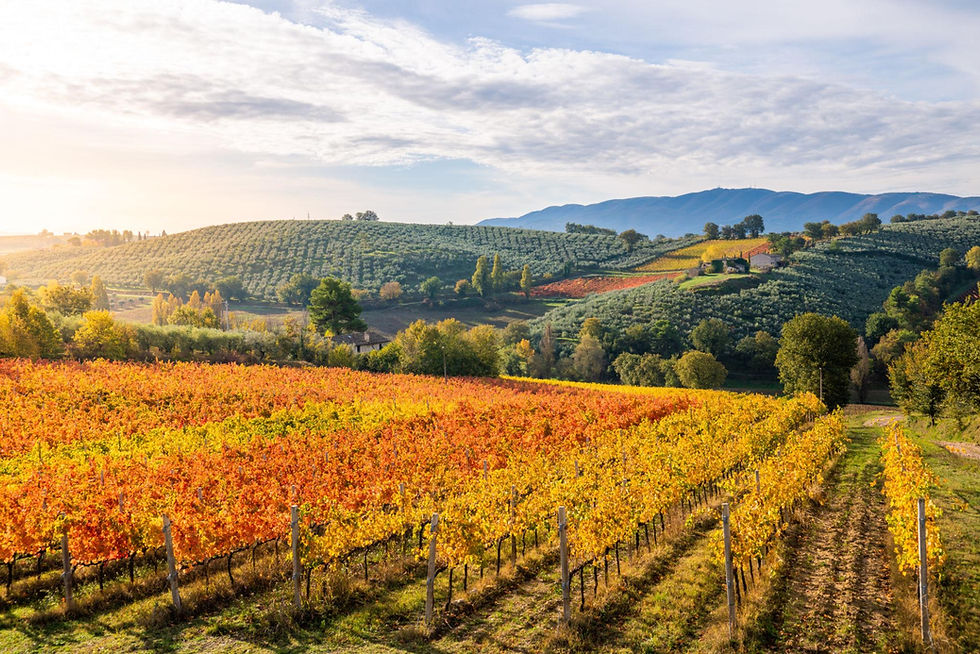
The Grape Sagrantino di Montefalco
Sagrantino is the most tannic indigenous variety in Italy — a distinction with both positive and limiting implications. The tannin level of a Sagrantino di Montefalco DOCG typically exceeds that of even the most tannic Barolo or Amarone; in young vintages (under five years), the wine can be almost undrinkably astringent on its own. It is made for long ageing — the DOCG regulations require a minimum of 37 months before release, including at least 12 months in oak — and the payoff for patience is a wine of remarkable depth, with primary fruit giving way over a decade to the dried fruit, tobacco, chocolate, and mineral notes that make mature Sagrantino one of Italy's most complex reds.
The origins of the Sagrantino variety are debated — genetic analysis has not found a close relationship with other Italian varieties, and the theory that it was introduced by Franciscan monks as a sacramental wine (the name linked to sacro) remains unresolved. What is known is that it is autochthonous to this specific valley and has been cultivated here, and nowhere else, for several hundred years.
The Town of Montefalco
Montefalco sits on a ridge above the Valle Umbra at approximately 480 metres, its circular medieval walls almost entirely intact, its central piazza preserving the proportion and scale of a fourteenth-century Umbrian hill town without the overlay of mass tourism that affects Assisi or Spello nearby. The town calls itself "la ringhiera dell'Umbria" — the balcony of Umbria — in reference to the panoramic view from its walls across the valley. The church of San Francesco in the piazza — now a civic museum — contains a fresco cycle by Benozzo Gozzoli (1452) depicting the life of Saint Francis alongside scenes from the lives of Saints Jerome and Anthony of Padua that is among the most complete Gozzoli cycles in existence.
The Cellar Visit
The DOCG zone is small enough that a morning visit to one or two producers gives a representative picture of the appellation's range. The Sagrantino is produced by approximately fifty estates, ranging from the large-volume producers who sell internationally (Arnaldo Caprai, whose 25 Anni bottling effectively created the DOCG's international reputation in the 1990s) to small family estates making a few thousand bottles annually from old vineyards. A private visit to Arnaldo Caprai provides the historical context and a technically serious tasting; a visit to one of the smaller family producers — Scacciadiavoli, Antonelli, or Perticaia — provides the more personal version. June in the Montefalco hills is the correct month: the vines in full leaf, the Sagrantino clusters visible in early berry development, the valley morning light on the olive groves and vineyards before the afternoon heat.


